Imagine stepping into a small living room where every inch feels like a cozy hug instead of a cluttered maze. Minimalist design isn’t just a trend; it’s a lifestyle choice that transforms cramped spaces into serene sanctuaries. With just a few strategic decisions, anyone can turn their tiny living area into a stylish retreat that even Marie Kondo would envy.
What Is a Minimalist Small Living Room?
A minimalist small living room embodies simplicity and functionality. It emphasizes a clean aesthetic by reducing unnecessary items and focusing on essential pieces. This design style promotes open spaces, allowing natural light to enhance the room’s atmosphere.
Key features include neutral colors, which contribute to a serene environment. Light shades create an illusion of space, making the room appear larger. Storage solutions play a crucial role in maintaining order. Multi-functional furniture, like ottomans or coffee tables with hidden storage, eliminates clutter.
Furniture selection focuses on quality over quantity. Each item serves a purpose, enhancing usability while avoiding visual overload. For instance, a sleek sofa can become a central element, embodying elegance without crowding the room.
Accessories remain minimal. A few well-placed decorative items can add personality without overwhelming the space. Plants serve as excellent additions, bringing life and freshness while maintaining a simple visual appeal.
In a minimalist small living room, organization becomes paramount. Implementing clever storage solutions and maintaining a curated selection of items supports a peaceful ambiance. Achieving this balance can transform a small space into a tranquil retreat.
Key Elements of Minimalist Design
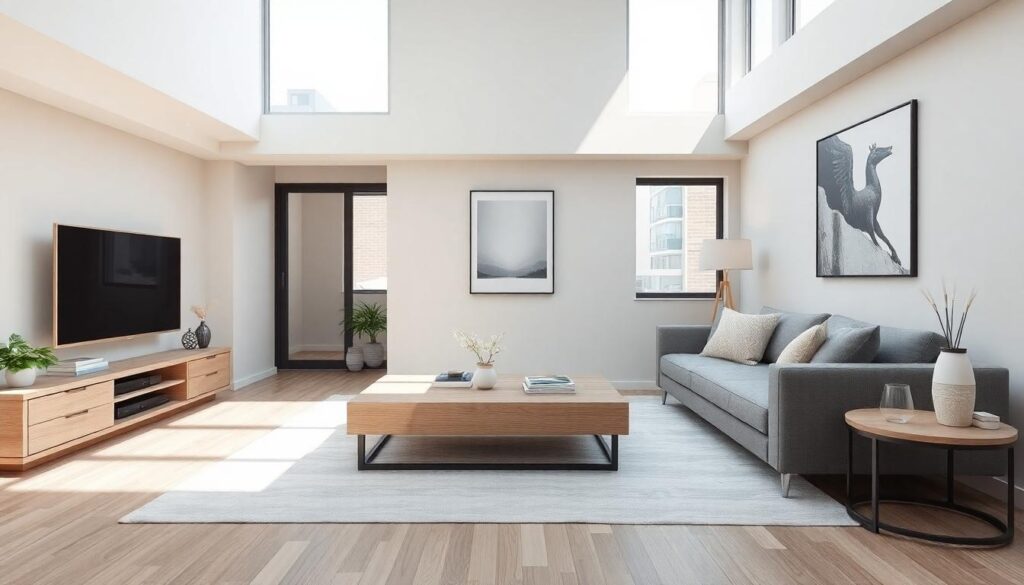
Minimalist design thrives on simplicity and intentionality, offering a soothing ambiance in small living rooms. Key elements like color palettes, furniture selection, and decluttering strategies contribute significantly to achieving a minimalist aesthetic.
Color Palette
Neutral color palettes dominate minimalist spaces, creating a calm atmosphere. Soft whites, grays, and beiges allow for light reflection, improving perceived spaciousness. Incorporating one or two accent colors infuses personality without overwhelming the visual harmony. Light-colored walls along with strategically placed darker furniture enhance depth while maintaining a cohesive look. Consistency in shades across furnishings and accessories promotes an uncluttered feel, essential for small living areas.
Furniture Selection
Furniture selection plays a crucial role in minimalism. Opting for multi-functional pieces maximizes utility while conserving space. Sofas with built-in storage or coffee tables that double as ottomans illustrate efficient design choices. Quality materials enhance longevity and comfort, reducing the need for frequent replacements. Fewer, yet functional, items prevent overcrowding, allowing the space to breathe. Choosing a streamlined profile for furniture complements the overall minimalist theme, reinforcing simplicity.
Decluttering Strategies
Decluttering strategies form the backbone of minimalist living. Regularly assessing belongings prevents accumulation of unnecessary items, maintaining order in the space. Utilizing storage solutions like under-sofa bins and wall-mounted shelves ensures that essential items remain accessible. Encouraging a “one in, one out” policy promotes mindful consumption, preventing clutter buildup. Creating designated spaces for frequently used items supports easy organization and promotes a zen-like environment. Adopting these strategies reinforces the minimalist lifestyle, contributing to a serene small living room.
Benefits of a Minimalist Small Living Room
A minimalist small living room offers numerous advantages that enhance both functionality and aesthetic appeal.
Enhanced Space Perception
Neutral color palettes like soft whites and light grays contribute to a more spacious feel. Keeping furniture to a minimum allows for better movement within the room. Multi-functional pieces, such as ottomans with storage, create usable space without overcrowding the area. Streamlined designs eliminate visual clutter, promoting a sense of tranquility. Strategic placement of mirrors can amplify natural light, further enhancing the perception of openness. By purposely reducing accessories, the focus remains on key elements, fostering a serene atmosphere.
Easier Maintenance
Minimalist living spaces require less time for cleaning, making maintenance straightforward. Fewer items mean less dust accumulation and quicker dusting sessions. Choosing quality furniture often results in more durable surfaces, leading to less frequent replacements. Simple decor reduces the time spent rearranging or organizing. With clear surfaces, minor spills or messes become easier to address promptly. Implementing designated storage solutions makes it simple to keep everything in its place, allowing for a more organized living environment.
Tips for Creating Your Own Minimalist Small Living Room
Creating a minimalist small living room involves careful planning and an eye for detail. With the right techniques, anyone can optimize space without sacrificing style.
Space Optimization Techniques
Utilizing vertical space can dramatically increase storage options. Shelving units positioned high on walls draw the eye upwards, creating an illusion of expanded height. Multi-functional furniture, such as ottomans with hidden compartments, serves dual purposes while freeing up floor space. Arranging furniture to encourage flow promotes easy movement, enhancing the overall functionality of the room. Regular decluttering ensures that excess items do not accumulate, maintaining a clean aesthetic. Choosing light color palettes also contributes to a sense of spaciousness, as they reflect natural light better.
Personalization Without Clutter
Incorporating personal touches can infuse warmth into a minimalist space. Select a few meaningful art pieces to serve as focal points, while avoiding overcrowding the walls. Decorative cushions with simple patterns can add texture without overwhelming the visual appeal. Plants introduce life to the environment, requiring minimal maintenance while improving air quality. Prioritizing quality over quantity for accessories makes each item resonate more intensely. Utilizing a single statement piece, like a bold rug or unique lamp, creates a stylish impact and anchors the room.
Embracing a minimalist approach in a small living room can significantly enhance both style and functionality. By focusing on essential pieces and maintaining a clutter-free environment, individuals can create a serene retreat that feels spacious and inviting. The strategic use of neutral colors and multi-functional furniture not only optimizes space but also promotes a calming atmosphere.
Regular decluttering and thoughtful design choices ensure that each item serves a purpose while contributing to the overall aesthetic. With careful planning and attention to detail, anyone can transform their small living space into a harmonious haven that reflects their personality and lifestyle. Minimalism isn’t just a design choice; it’s a way to foster tranquility and simplicity in everyday life.