


Imagine stepping into a living room that feels like a breath of fresh air—no clutter, just a serene oasis of white. The minimalist white living room isn’t just a trend; it’s a lifestyle choice that says, “I’m sophisticated, but I also know how to enjoy my space.” With its clean lines and bright ambiance, this design style transforms any home into a chic sanctuary, perfect for both relaxation and entertaining.
Overview of Minimalist White Living Rooms
Minimalist white living rooms focus on simplicity and elegance. These spaces prioritize functionality without sacrificing style. White as a dominant color creates a sense of openness and lightness, making even smaller areas feel spacious. Clean lines in furniture enhance the uncluttered aesthetic, promoting a calming atmosphere.
Furniture selection plays a critical role in achieving this look. Sleek sofas, glass coffee tables, and geometric shelving complement the minimalist theme. Incorporating natural materials like wood or metal introduces warmth without overwhelming the white palette.
Lighting also significantly affects the overall vibe. Ambient lighting fixtures and strategically placed lamps enhance the brightness while adding visual interest. Natural light through large windows amplifies the serene environment associated with minimalist white living rooms.
Accessories should be minimal yet impactful. Thoughtfully chosen art pieces or sculptures can serve as focal points, accentuating the room’s simplicity. Plants add a touch of nature and color, creating a vivid contrast against the white background.
Storage solutions in minimalist designs often blend seamlessly into the decor. Built-in shelving or hidden compartments minimize visual chaos while maintaining functionality. This approach fosters an orderly and serene space perfect for relaxation and social gatherings.
Minimalist white living rooms marry sophistication with a tranquil ambiance. Each design element contributes to an inviting atmosphere that reflects personal style while keeping clutter at bay. Embracing this aesthetic transforms living spaces into chic sanctuaries for enjoyment and reprieve.
Benefits of Minimalist Design
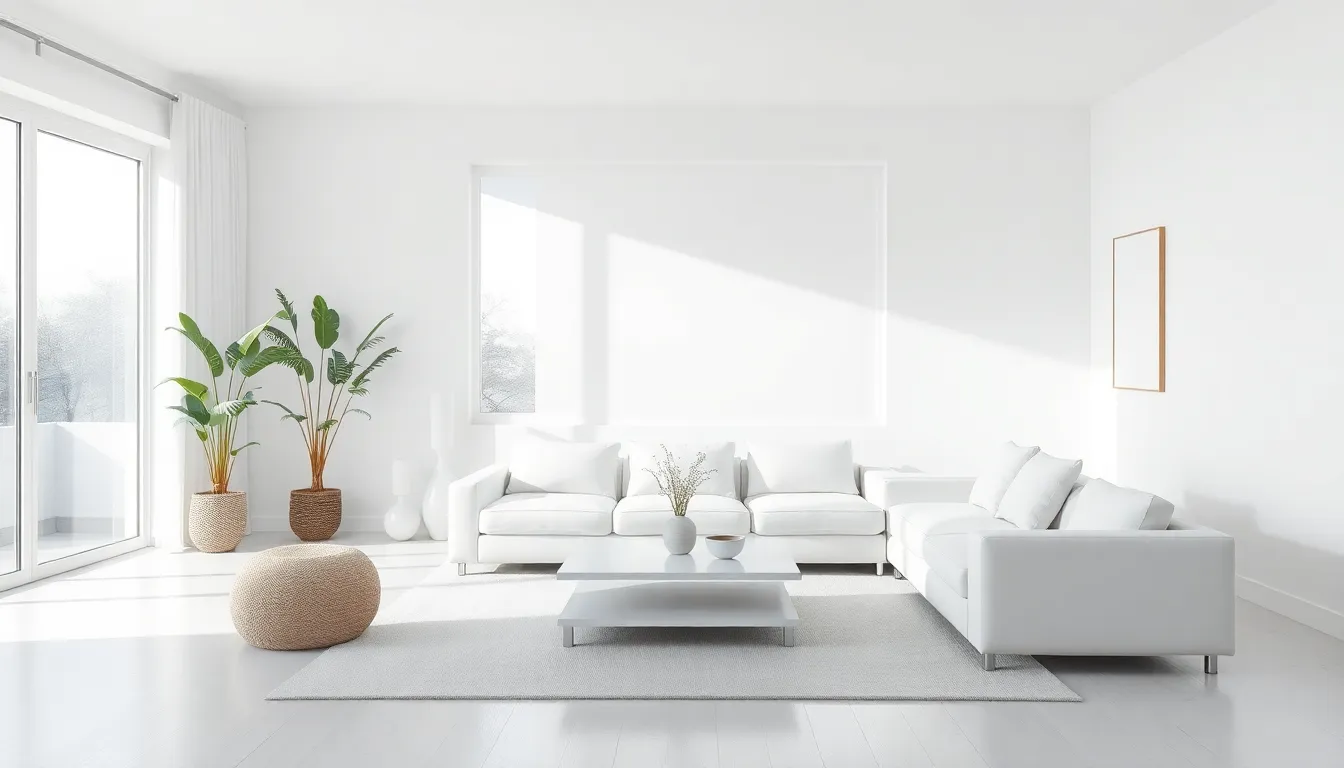
Minimalist design offers numerous advantages, particularly in creating tranquil living spaces. It simplifies environments, fosters clarity, and elevates overall aesthetics.
Simplicity and Clarity
Simplicity defines minimalist design, promoting an uncluttered atmosphere that reduces stress. Clear spaces allow individuals to focus, enhancing productivity and relaxation. Functionality thrives in such settings, as essential items remain easily accessible. Natural light amplifies this clarity, making each corner feel purposeful. By prioritizing quality over quantity, minimalist spaces invite deeper connections with fewer distractions. Thoughtful arrangements of furniture and decor contribute to a serene ambiance. Low-profile items ensure that the visual field stays clear, showcasing intentional design choices.
Enhanced Space Perception
Enhanced space perception benefits those living in smaller areas. Minimalist white living rooms create an illusion of expansiveness through strategically chosen colors and layouts. Light colors reflect sunlight, making interiors feel airier and brighter. Open floor plans eliminate visual barriers, encouraging fluid movement throughout the home. Furniture pieces elevate this effect, as low-profile designs avoid overwhelming the space. Effective use of mirrors further amplifies brightness, extending depth and dimension. Minimalist design extends the perception of space, inviting a sense of freedom within established boundaries. This approach creates an inviting environment, emphasizing comfort alongside style.
Key Elements of a Minimalist White Living Room
A minimalist white living room emphasizes simplicity and elegance while creating an open, serene environment. Key elements contribute to a cohesive and inviting space.
Color Palette
White dominates the color scheme, promoting a bright and airy feel. Soft neutrals complement the white, adding warmth without overwhelming the design. Incorporating light grays and beige creates subtle contrast, enhancing visual interest. Occasional pops of color through artwork or cushions add vibrancy while maintaining a calm ambiance. Choosing a cohesive palette ensures harmony between all elements, fostering a tranquil atmosphere.
Furniture Selection
Sleek furniture defines a minimalist living room. Low-profile sofas and chairs maximize space, keeping the look open and airy. Pieces with clean lines eliminate visual clutter, enhancing simplicity. Natural materials like wood, leather, and metal bring warmth and texture to the environment, ensuring comfort without sacrificing style. Selecting multifunctional furniture promotes orderliness while serving practical needs, such as storage options disguised as decorative elements.
Lighting Choices
Effective lighting plays a crucial role in creating an inviting atmosphere. Natural light sources should be maximized with sheer window treatments that maintain privacy without blocking sunlight. Layered lighting, including floor lamps and wall sconces, offers warmth and depth. Opting for fixtures with minimal designs contributes to a clutter-free look. Adjustable lighting can enhance functionality, adapting to different moods and activities while preserving the minimalist aesthetic.
Decorating Tips for a Minimalist White Living Room
Creating a minimalist white living room involves thoughtful design choices that enhance both comfort and aesthetics. The following tips focus on incorporating textures and utilizing accessories effectively.
Incorporating Textures
Integrating various textures adds depth to a minimalist white living room. Soft fabrics like linen or cotton for cushions create a cozy feel. Natural wood elements, such as a coffee table or shelving, introduce warmth and contrast. Stone accents, like a marble side table, lend elegance and sophistication. Layered textiles in rugs or throws visually break up the monotony of white. These combined textures promote a sense of inviting serenity, making the space more vibrant and engaging.
Use of Accessories
Minimizing clutter involves selecting impactful accessories that complement the minimalist theme. Choose art pieces with bold colors to provide focal points without overwhelming the room. Consider using greenery, like potted plants or succulents, to infuse life and freshness. Simple decorative items, such as a sleek vase or unique sculptures, can enhance visual interest. Implement mirrors strategically to reflect light and create the illusion of a larger space. Each accessory should serve a purpose while contributing to the overall tranquility and elegance of the living room.
A minimalist white living room embodies a harmonious blend of style and serenity. This design approach not only enhances the visual appeal but also promotes a sense of calm and order. By prioritizing functionality and simplicity, individuals can create spaces that feel both expansive and inviting.
Incorporating textures and thoughtfully chosen accessories can elevate the overall aesthetic while maintaining the tranquil atmosphere. As a result, a minimalist white living room becomes not just a design choice but a lifestyle that encourages relaxation and clarity. Embracing this style allows for a home that reflects personal taste while fostering a peaceful environment.


