Imagine stepping into a living room that feels like a breath of fresh air—no clutter, no chaos, just pure serenity. Minimalist living room design isn’t just a trend; it’s a lifestyle choice that transforms spaces into havens of tranquility. It’s like giving your home a spa day, minus the cucumbers on your eyes.
By embracing simplicity, one can create a space that’s not only aesthetically pleasing but also functional. Who needs a mountain of throw pillows when a single, stylish one can do the trick? Minimalism invites creativity, allowing personality to shine through without the distraction of excess. Ready to declutter your life and elevate your living space? Let’s dive into the art of minimalist design that’ll have your friends wondering if you hired a professional decorator—or if you just discovered the secret to serene living.
Overview of Minimalist Living Room Design
Minimalist living room design focuses on essential elements that create a calm atmosphere. This design philosophy prioritizes function while embracing simplicity. Clean lines and open spaces enhance the sense of calm, inviting tranquility into the home.
Neutral color palettes dominate minimalist decor, with whites, greys, and beiges commonly used. These shades provide a backdrop that allows furniture and decor to stand out without overwhelming the senses. Natural light plays a vital role in minimalist designs, as large windows and unobstructed views promote an airy feel.
Furniture selection emphasizes form and function, with items that serve multiple purposes. A sleek sofa might also serve as a guest bed, while a coffee table could provide additional storage. Choosing fewer, high-quality pieces lends a sophisticated touch, avoiding clutter and distractions.
Decorative items are minimal and thoughtfully curated. One or two statement pieces can create visual interest without detracting from the overall design. Artworks with simple yet striking designs complement the space, often featuring geometric shapes or monochromatic themes.
Incorporating plants enhances the design by adding life and color to the room. Plants such as succulents or snake plants require minimal care and thrive in various lighting conditions. These natural elements will purify the air, contributing to a healthier indoor environment.
Achieving a minimalist living room design involves careful planning and intentional choices. The result is a serene space that fosters relaxation and promotes mindfulness. Embracing this design concept allows individuals to express their personal style without the distraction of excess.
Key Principles of Minimalist Design
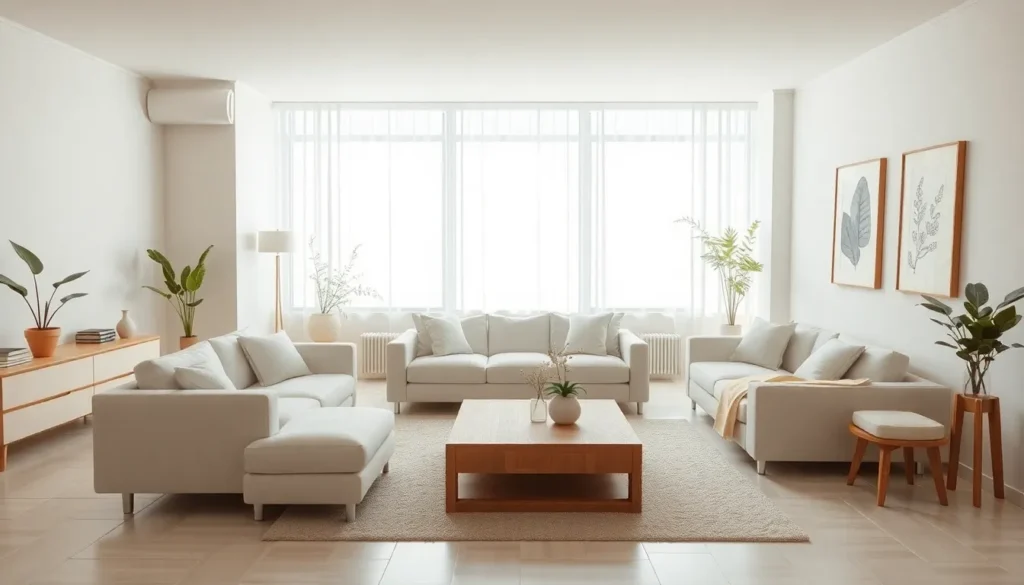
Minimalist design centers around clarity and purpose, creating serene living spaces that enhance relaxation. Prioritizing essential elements leads to an uncluttered aesthetic that promotes a peaceful environment.
Simplicity and Functionality
Simplicity serves as the foundation for minimalist living room design. Furniture combines form and function, ensuring every piece serves a specific purpose. Multi-functional items reduce clutter, creating open spaces that feel larger and more inviting. Thoughtful arrangements support ease of movement, enhancing the overall functionality of the room. When choosing furniture, selecting streamlined designs adds to the minimalist vibe. Pieces that offer storage capabilities minimize the need for additional furnishings, contributing to a tranquil atmosphere. Intentional choices lead to a space that reflects an uncluttered mindset and prioritizes well-being.
Neutral Color Palettes
Neutral color palettes play a vital role in minimalist design. Shades such as white, grey, and beige create a calming backdrop that highlights furniture and decor. These colors evoke a sense of tranquility, making spaces feel airy and open. Accents can be introduced through accessories or artwork to add subtle interest without overwhelming the senses. Incorporating natural materials, like wood or stone, enhances the connection to nature while maintaining a neutral scheme. Light tones maximize natural light, further amplifying the serene ambiance. Coordinated colors contribute to a cohesive look, promoting harmony throughout the living space.
Essential Elements of Minimalist Living Rooms
Minimalist living rooms prioritize simplicity and functionality. This approach centers on essential elements that create a serene and inviting space.
Furniture Choices
Furniture selection is crucial in minimalist design. Choose multi-functional pieces that serve specific needs. For instance, a sofa bed combines seating and sleeping options. Opt for clean lines and unobtrusive forms to maintain a sense of openness. Less is more, so limit the number of furniture items to avoid visual clutter. A single coffee table with storage capabilities maximizes both style and practicality. Intentionally curated selections highlight functionality while enhancing aesthetic appeal.
Lighting Solutions
Natural light plays a vital role in minimalist living rooms. Incorporate large windows to flood the space with sunshine. Floor-to-ceiling options create an airy atmosphere while showcasing the outdoors. In addition to natural light, use sleek pendant lights or unobtrusive floor lamps to enhance illumination. LED fixtures offer energy efficiency combined with a modern touch. Consider dimmable options to adjust brightness according to mood and activity, adding versatility to the space. Thoughtfully designed lighting complements the minimalist aesthetic while ensuring comfort and warmth.
Tips for Achieving a Minimalist Look
Achieving a minimalist living room look requires intentional choices. Focus on decluttering and arranging essentials thoughtfully.
Decluttering and Organizing
Start by removing unnecessary items from the space. Sort belongings into categories: keep, donate, or discard. This process establishes a clear visual pathway. Storage solutions play a crucial role; under-sofa bins or hidden shelves can optimize space. Invest in multi-functional furniture, such as ottomans with storage, which also serve as seating. Regularly evaluate and maintain the space, ensuring clutter doesn’t return. Cultivating a habit of conscious consumption can further reduce accumulation over time.
Combining Form and Function
Select furniture that showcases both aesthetics and utility. A coffee table with drawers provides style while offering hidden storage. Minimalist designs often feature simple lines and a streamlined appearance. Choose pieces that fit the scale of the room, enhancing openness and flow. Seating options like a sleek sofa with integrated book storage highlight effectiveness without compromising looks. Additionally, prioritize natural materials, as they add warmth and depth while supporting sustainable practices. Combining these elements creates a harmonious environment that reflects minimalist values.
Embracing minimalist living room design offers a pathway to serenity and clarity. By prioritizing simplicity and functionality, individuals can craft spaces that not only look beautiful but also enhance their daily lives. Thoughtful furniture choices and a focus on natural light create an inviting atmosphere that promotes relaxation.
The integration of multi-functional pieces and strategic storage solutions further supports a clutter-free environment. With a neutral color palette and carefully selected decor, each element contributes to a cohesive and harmonious space. Adopting these principles allows anyone to enjoy the benefits of minimalist living, transforming their home into a tranquil retreat that reflects personal style and values.