In a world overflowing with clutter and distractions, minimalist crafts offer a refreshing escape. These creative pursuits focus on simplicity and functionality, allowing crafters to express their artistic vision without the chaos of excess materials. By embracing minimalism, individuals can create beautiful pieces that not only enhance their living spaces but also promote a sense of calm and mindfulness.
Minimalist crafts encourage resourcefulness, often utilizing everyday items and repurposed materials. This approach not only reduces waste but also sparks creativity, leading to unique and personalized creations. Whether it’s through simple paper crafts, elegant home decor, or thoughtful gifts, minimalist crafting provides an opportunity to reconnect with the joy of making while fostering a sustainable lifestyle.
What Are Minimalist Crafts?
Minimalist crafts focus on simplicity and practicality, seeking to eliminate distractions through streamlined design. They invite creativity while promoting sustainability by using fewer materials and repurposing items.
Definition and Principles
Minimalist crafts prioritize essential elements over excess. Key principles include simplicity, which emphasizes clean lines and basic forms, and functionality, ensuring each piece serves a purpose. Materials often include natural and sustainable options, inviting crafters to explore the beauty of unembellished textures and colors. Resourcefulness plays a critical role; many projects utilize everyday items or leftovers, turning potential waste into art. This crafting style encourages a mindful approach, focusing on intentional choices that align with personal values.
Benefits of Minimalist Crafts
- Reduced clutter: They create tidy, serene spaces by minimizing physical and mental distractions.
- Sustainable practices: Using fewer materials encourages environmentally friendly choices, contributing to waste reduction.
- Cost efficiency: Repurposing items saves money, allowing crafters to create without significant financial investment.
- Enhanced creativity: Constraints foster innovation, prompting unique designs that stem from simpler ideas.
- Mindfulness: Engaging in minimalism inspires meditation on the crafting process, promoting relaxation and focus.
Types of Minimalist Crafts
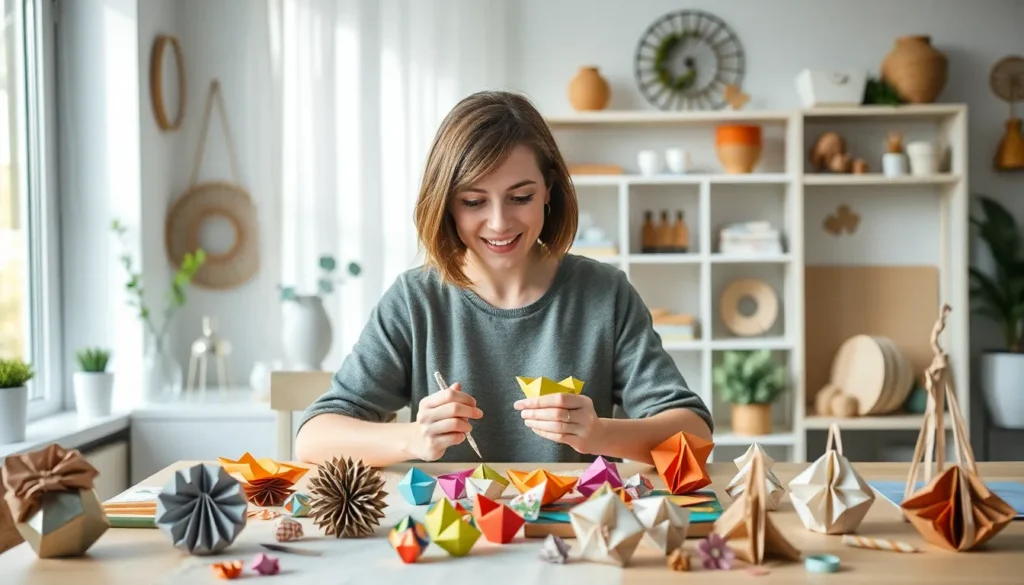
Minimalist crafts encompass various forms that prioritize simplicity and functionality. Each type utilizes essential materials to create unique, appealing items.
Paper Crafts
Paper crafts emphasize simplicity and versatility. Techniques include origami, paper cutting, and card making. Crafters often use recycled paper to reduce waste and add a personal touch. Popular projects involve creating greeting cards, bookmarks, or minimalist wall art. These crafts allow for experimentation with texture and patterns without overwhelming complexity.
DIY Home Decor
DIY home decor focuses on minimalistic aesthetics through practical design. Common projects include creating wall hangings, centerpieces, and decorative containers. Crafters use neutral color palettes and clean lines to enhance spaces effectively. For example, a simple wooden shelf can serve as both storage and an aesthetic focal point. This approach encourages individuals to personalize their living environments while maintaining a clutter-free atmosphere.
Upcycled Materials
Upcycled materials transform everyday items into functional art. This process not only reduces waste but also embodies the principles of minimalism. Popular materials include glass jars, fabric scraps, and old furniture. Crafters might create planters from jars or wall organizers from repurposed wood. These projects promote creativity while encouraging sustainable practices and resourcefulness.
Techniques for Creating Minimalist Crafts
Minimalist crafts require specific techniques to reflect simplicity and functionality. By focusing on essential design elements and color choices, crafters can produce stunning yet uncomplicated pieces.
Simplifying Designs
Simplifying designs involves stripping away unnecessary elements. He or she can achieve this by focusing on clean lines and open space, creating an uncluttered aesthetic.
- Prioritize functionality: Each element must serve a purpose, enhancing usability.
- Limit decorative features: Avoid excessive embellishments that distract from the main purpose.
- Use geometric shapes: Simple geometric shapes contribute to a modern, minimalist feel.
- Choose symmetry: Symmetrical designs promote balance and harmony visually.
- Incorporate negative space: Allowing for empty spaces draws attention to the key features of the design.
Choosing Color Palettes
Choosing color palettes is crucial in minimalist crafts to evoke serenity and clarity.
- Focus on neutral colors: Shades like white, gray, and beige create a calming effect.
- Use monochromatic schemes: Sticking to one color in various shades fosters cohesiveness.
- Select accent colors: Incorporate one or two bold colors to add interest without overwhelming the design.
- Emphasize natural tones: Earthy hues like greens and browns connect crafts to nature, enhancing their simplicity.
- Limit color combinations: Keeping to fewer than three colors simplifies the overall look.
Essential Tools and Materials
To create minimalist crafts effectively, having the right tools and materials enhances the crafting experience. These essential items help streamline the process and foster creativity within a simplified framework.
Basic Tools for Minimalist Crafting
- Scissors: Use sharp scissors for clean cuts on paper and other materials.
- Craft Knife: A precision craft knife enables more detailed and intricate designs.
- Cutting Mat: A self-healing cutting mat protects surfaces and prolongs the life of blades.
- Ruler: A sturdy ruler assists in measuring and achieving straight lines, crucial for minimalist aesthetics.
- Glue: Use PVA glue for paper projects or hot glue for faster adhesion of heavier materials.
- Paintbrushes: Choose a few quality brushes for applying paint or finishes, promoting color simplicity.
- Pencil: A good pencil serves for sketching designs before making final cuts, ensuring accuracy.
Recommended Supplies
- Paper: Opt for high-quality, acid-free paper, which is easy to work with and enhances longevity.
- Natural Materials: Incorporate items like wood, stones, or leaves to maintain an organic feel in projects.
- String or Twine: Use natural fibers for embellishments or to assemble parts, supporting minimalist design principles.
- Paints: Select a limited palette of neutral or natural tones, encouraging a serene crafting atmosphere.
- Adhesive Tapes: Use washi tape or painter’s tape to create easily removable or repositionable designs.
- Recycled Items: Utilize leftover materials from previous projects, fostering a resourceful crafting approach.
- Storage Solutions: Maintain organization with minimal storage options like baskets or boxes, reducing clutter and enhancing workflow.
Embracing minimalist crafts offers a refreshing approach to creativity that prioritizes simplicity and functionality. By focusing on essential elements and reducing clutter, crafters can cultivate a more mindful and enjoyable crafting experience. The ability to transform everyday materials into beautiful pieces not only enhances living spaces but also fosters a sustainable lifestyle.
As individuals explore various types of minimalist crafts, they’ll discover the joy of making while supporting eco-friendly practices. With the right tools and techniques, anyone can engage in this fulfilling artistic journey that emphasizes clarity and purpose. Ultimately, minimalist crafting serves as a powerful reminder of the beauty found in simplicity.