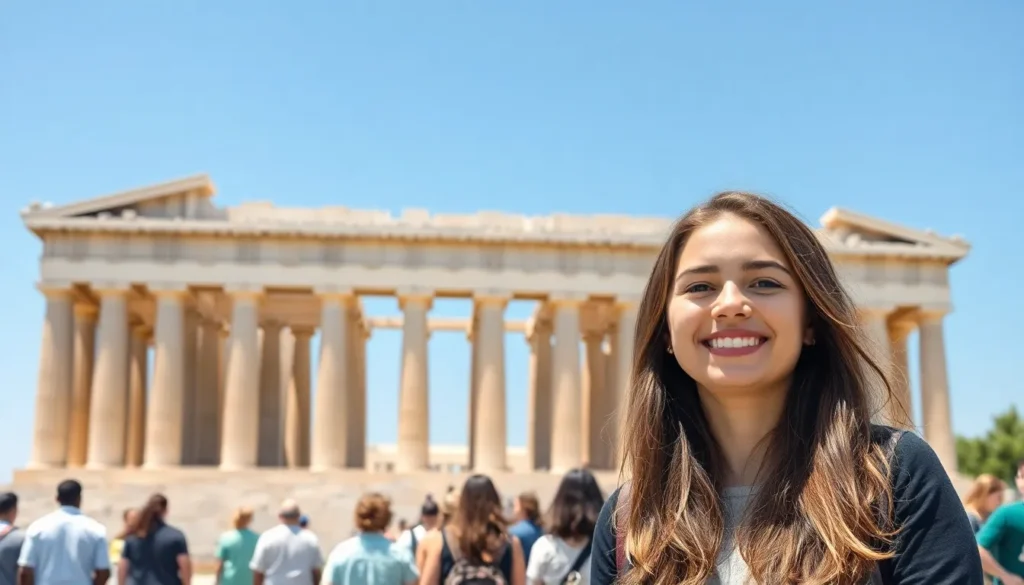

Imagine a world where philosophy, art, and gladiators collide in a spectacular showdown. Welcome to Greco-Roman culture, the ultimate mashup of ancient Greece and Rome that’s still influencing everything from modern democracy to your favorite superhero movies. It’s a rich tapestry of mythology, epic battles, and some of the best pasta recipes you’ll ever encounter—just kidding about the pasta, but you get the idea!
Overview of Greco Roman Culture
Greco-Roman culture represents a fusion of the civilizations from ancient Greece and Rome. This unique blend shaped various aspects of life, including philosophy, politics, and the arts. Noteworthy philosophers such as Plato and Aristotle laid foundational ideas that influenced Western thought.
Art in the Greco-Roman context showcased a commitment to realism and proportion. Statues, murals, and architecture displayed intricate details, reflecting human emotion and physical form. Famous sculptures like the Venus de Milo and the Elgin Marbles illustrate this dedication to beauty.
Political systems emerged from this cultural continuum, with democracy originating in Greece and evolving in Rome. Greece’s direct democratic practices inspired Roman governance, which introduced legal frameworks that affect modern governance today.
Culinary traditions in Greco-Roman culture also left a significant imprint. Ingredients such as olives, grains, and wines formed staples of their diet, influencing Mediterranean cuisine. Recipes and food practices from this era continue to resonate in contemporary cooking methods.
Gladiatorial games served as a popular form of entertainment. Amphitheaters hosted these events, showcasing bravery and skill while engaging public interest. These spectacles contributed to the social dynamics of ancient society, illustrating the cultural emphasis on honor and combat.
Literature flourished in both cultures, producing epic poems, dramas, and histories. Works by Homer, Virgil, and Ovid remain influential, enriching educational curricula worldwide. Their narratives explored themes of heroism, love, and morality, resonating through centuries.
Religious beliefs blended deities and mythologies, creating a pantheon that represented various aspects of life. Worship sites and rituals played significant roles in daily activities, emphasizing community involvement and civic religious duties.
Historical Background
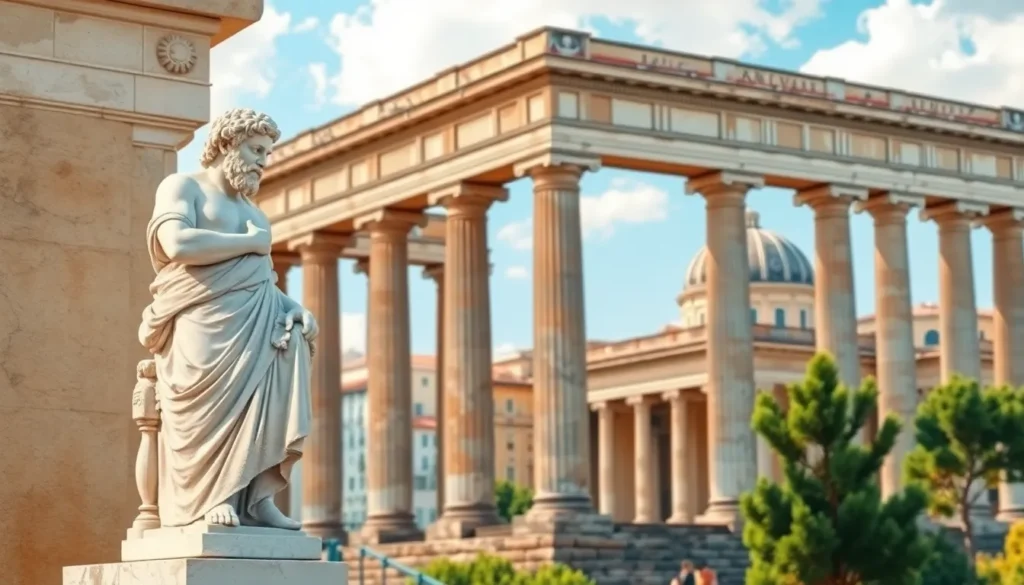
Greco-Roman culture emerged as a significant fusion of ancient Greek and Roman elements, influencing numerous aspects of contemporary society.
The Rise of Ancient Greece
Ancient Greece originated around the 8th century BCE, marked by the establishment of city-states like Athens and Sparta. Intellectualism thrived during this period, leading to advancements in philosophy and the arts. Democracy, created in Athens, allowed citizens a voice in governance. Philosophers, including Socrates, Plato, and Aristotle, contributed ideas that form the basis of Western thought. Artistic achievements included pottery and sculpture characterized by realism, evident in works like the Discobolus. The Olympic Games, founded in 776 BCE, highlighted Greek values of physical prowess and competition, setting cultural standards that resonate today.
The Influence of Rome
Rome rose to prominence in the 1st century BCE, inheriting and transforming Greek culture. This civilization adopted Greek philosophy and art while developing its unique contributions, including architectural innovations like the arch and concrete. Roman law, derived from earlier Greek systems, laid the groundwork for modern legal frameworks. Political structures reflected both democracy and authoritarian rule, with the Senate playing a crucial role in governance. Additionally, the Latin language became a cornerstone for many modern languages, illustrating Rome’s far-reaching influence. Gladiatorial games showcased Roman values of strength and endurance, serving as both entertainment and a reflection of societal norms.
Key Characteristics of Greco Roman Culture
Greco-Roman culture embodies a rich heritage of artistic, philosophical, and literary accomplishments that define its lasting legacy.
Art and Architecture
Art and architecture from this era emphasized realism and proportion. Sculptures such as the Venus de Milo reveal mastery in the human form. The Parthenon stands as an architectural marvel, illustrating the Greeks’ devotion to aesthetics and functionality. Roman innovations included the extensive use of arches and concrete, transforming cityscapes. Monumental structures like the Colosseum demonstrated both grandeur and practicality, serving as venues for public spectacles. These artistic endeavors not only celebrated beauty but also conveyed cultural narratives and civic pride.
Philosophy and Literature
Philosophy thrived in this dynamic culture, laying foundational concepts for Western thought. Plato’s forms and Aristotle’s ethics significantly influenced future intellectual pursuits. Literary works captured the complexities of human experience; Homer’s epics explored themes of heroism while Virgil’s Aeneid delved into duty and destiny. Ovid’s Metamorphoses examined transformation and the interplay of love and power. These authors left indelible marks on literature, blending mythology with moral lessons that resonate today. Each narrative conveyed moral and philosophical insights, shaping societal values and individual thought in profound ways.
Religion and Mythology in Greco Roman Culture
Religion and mythology played vital roles in Greco-Roman culture, influencing daily life, art, and literature. Gods and goddesses filled the pantheon, reflecting human experiences and natural phenomena.
Major Deities
Greek and Roman mythologies featured a range of major deities. Zeus, the king of the gods, ruled the sky. Hera, his wife, embodied marriage and family. Poseidon governed the seas, while Demeter presided over agriculture. In Roman culture, Jupiter mirrored Zeus, while Juno played Hera’s role. Mars represented war and Venus personified love. Each god and goddess held significance in societal rituals and civic duty.
Mythological Narratives
Narratives intertwined with Greco-Roman religion resulted in rich storytelling traditions. Epic tales like those of Homer’s Iliad and Virgil’s Aeneid explored themes such as heroism, fate, and divine intervention. Ovid’s Metamorphoses highlighted transformation and the complexities of love. These narratives influenced philosophical thought, underlining human struggle against fate while portraying moral and ethical lessons. The mythological framework shaped cultural identity, linking individuals to their civilization’s past.
The Legacy of Greco Roman Culture
Greco-Roman culture left an indelible mark on various elements of modern society and continues to influence contemporary thought and practices.
Influence on Western Civilization
Philosophical ideas from Plato and Aristotle lay the groundwork for Western thinking. Democracy, originating in ancient Greece, inspires modern governance structures. Architectural innovations such as columns and domes shape contemporary buildings, creating a link between past and present. Literature, featuring works by Homer and Virgil, provides insights into human nature and morality. These narratives resonate in today’s storytelling, impacting literature and cinema. Legal systems also reflect Roman contributions, with principles of justice and rights still prevalent. Observing this, one can conclude that the foundations of Western civilization stem from Greco-Roman ideals and practices.
Modern Interpretations
Modern artists and writers often draw inspiration from Greco-Roman themes. Films frequently depict mythological narratives, showcasing the timeless appeal of stories like those of Hercules or Odysseus. In architecture, neoclassical designs mirror ancient styles, emphasizing symmetry and grandeur. Educational institutions often incorporate references to classical texts, reinforcing the relevance of ancient philosophies in current curricula. Moreover, culinary traditions rooted in Greco-Roman practices influence Mediterranean cuisine today. Sharing this heritage, communities celebrate festivals inspired by ancient rituals, fostering cultural continuity. Observing these connections illustrates how Greco-Roman culture remains vibrant throughout modern interpretations.
Greco-Roman culture remains a cornerstone of Western civilization. Its philosophical insights artistic achievements and political innovations continue to shape modern society. From the enduring influence of its literature to the architectural marvels that define cityscapes today this ancient civilization offers a rich legacy.
The fusion of Greek and Roman elements not only enhances contemporary thought but also enriches cultural expressions across various fields. As communities celebrate their historical roots through festivals and culinary traditions the vibrant spirit of Greco-Roman culture lives on. This cultural heritage serves as a reminder of humanity’s shared past and the timeless values that connect generations.